Garage Floor Coatings in Sugar Land, T
Durable, Beautiful & Professionally Installed Epoxy Floors
Durable, Beautiful & Professionally Installed Epoxy Floors
Garage floors are not all alike. Tire traffic, hot tires, rolling toolboxes, jack stands, stored equipment, and wet vehicles place different demands on a coating than ordinary interior foot traffic. For customers comparing garage floor coatings in Sugar Land, the most important question is not simply which product has the strongest marketing claim. The better question is which complete system fits the concrete, the environment, the traffic, the desired appearance, and the time available for installation and curing.
Sugar Land Epoxy Flooring Pros provides a local point of contact for property owners exploring garage floor coatings in Sugar Land, TX. A professionally planned project begins with the slab and its use conditions. Existing coatings, oil contamination, cracks, moisture, surface hardness, drainage, sunlight, cleaning practices, and expected wear can all influence preparation and material selection.
Resinous flooring is a category of seamless flooring built from liquid-applied materials that cure into a bonded surface. Epoxy is one widely used chemistry; polyaspartic and polyurea technologies are also used in floor-coating systems. Depending on the application, a system may use one chemistry throughout or combine compatible layers to balance adhesion, build, appearance, cure speed, abrasion resistance, and UV performance
Garage Floor Coatings in Sugar Land, T
Professional Garage Floor Coatings Services in Sugar Land
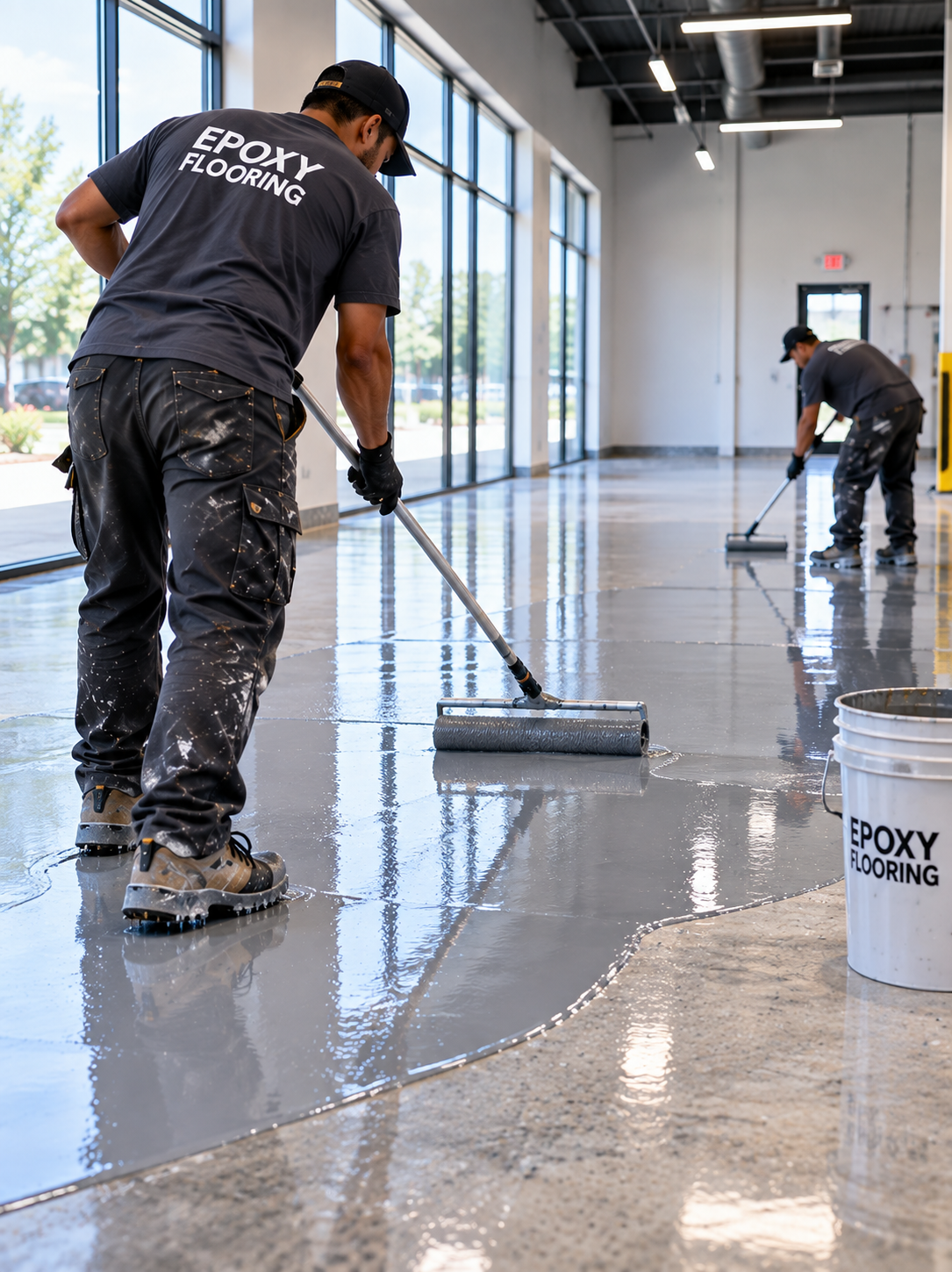
A successful garage floor coatings project is more than rolling material onto concrete. The slab must be evaluated, mechanically prepared to an appropriate profile, cleaned, repaired where practical, and coated with materials suited to the exposure.
Industry guidance on concrete coatings emphasizes that surface preparation is fundamental to long-term performance. Moisture conditions also matter because vapor moving through a slab can contribute to blistering, peeling, discoloration, or loss of bond.
For homeowners who want a cleaner, more finished garage and property owners dealing with stained, dusty, or difficult-to-maintain concrete, the service can address several goals at once: a more finished appearance, easier routine cleaning, resistance to common household spills and abrasion, reduced concrete dusting, and the ability to add texture and decorative color. The best combination depends on how the area is actually used. A decorative residential floor may prioritize appearance and easy cleaning, while a working commercial floor may place greater weight on abrasion, chemical exposure, texture, and downtime.
Sugar Land garages experience heat, humidity, tracked-in rain, lawn chemicals, automotive fluids, and frequent temperature swings at the garage door. A coating system should be selected for the slab condition, exposure, desired appearance, and realistic return-to-service needs. These local conditions do not automatically dictate one coating chemistry, but they make careful product selection and substrate evaluation worthwhile
Benefits of Garage Floor Coatings
A finished, intentional appearance. Bare concrete can look dusty, stained, or incomplete. Metallic Epoxy Flooring
can introduce consistent color, decorative texture, gloss, or other visual effects while helping the floor feel like part of
the finished property.
Simpler routine cleaning. Properly cured resinous surfaces are nonporous compared with untreated concrete and do not have grout lines. Dirt and spills remain on the surface rather than readily soaking into open concrete pores. Cleaning requirements still depend on the texture and use of the floor.
Protection tailored to use. Coating systems can be designed for abrasion, many common chemicals, foot or vehicle traffic, and repeated cleaning. Chemical resistance is formulation-specific, so known exposures should be discussed rather than assuming every coating resists every substance.
Design flexibility. Single- or multi-color metallic pigments, contrasting accent colors, different movement techniques, gloss or lower-sheen compatible topcoats, and traction choices where safety requirements call for them allow the project to be adjusted for appearance, traction, maintenance, and performance.
A system approach to concrete. Preparation and repairs can address weak surface material, minor defects, and old coatings before the new finish is applied. Coatings do not correct structural movement or every slab problem, but proper preparation gives the new system a sounder surface to bond to.
Where Metallic Epoxy Flooring Fits
Residential projects often emphasize appearance, cleanability, comfort under everyday use, and how the floor coordinates with the rest of the property. For metallic epoxy flooring, homeowners should consider vehicle or foot traffic, stored items, pets, water exposure, sunlight, and how much texture they want underfoot.
Commercial and light-industrial projects usually add operational questions: opening hours, equipment traffic,
cleaning chemicals, public access, safety markings, downtime, and maintenance. A coating for a business should be specified around those demands rather than simply duplicating a residential system at larger scale.
Common Applications and Project Goals
Common applications include showrooms, studios, salons, retail spaces, entertainment rooms, selected residential interiors, offices, lobbies, and other decorative concrete areas. Suitability should be confirmed for the specific space, especially where direct sunlight, standing water, aggressive chemicals, high heat, heavy point loads, or unusual movement are present.
The intended use should guide the specification. Foot traffic differs from vehicle or forklift traffic. A decorative room differs from a maintenance area. A covered slab differs from concrete exposed to weather. Even within one property, two areas may benefit from different coating builds or textures.
Customers should also think about how the space will be maintained after installation. Smooth finishes are generally
easier to mop, while heavier traction texture can improve grip but may require more aggressive cleaning. There is a practical balance between cleanability and slip resistance.
Materials, Finishes, and System Options
Garage Floor Coatings can involve several material and design decisions. Solid-color resin systems, decorative flake broadcasts, epoxy build coats, polyaspartic or polyurea components, clear protective topcoats, and optional traction aggregate. Resinous floors may be installed as relatively thin coatings or as higher-build systems with aggregate and multiple layers. Greater thickness is not automatically necessary for every project; it should correspond to the expected service conditions.
Epoxy is known for strong adhesion, build, and versatility and is commonly used as a primer, base coat, build coat, or decorative layer. Polyaspartic materials are valued for rapid curing, abrasion resistance, and color-stable/UV-resistant options. Polyurea products can also cure rapidly and are used in certain base, intermediate, or topcoat designs. Product data, compatibility, and site conditions should determine how these chemistries are combined.
Texture is another important choice. Fine traction additives can change the feel of a clear topcoat, while broadcast aggregate or decorative flake can create more pronounced texture. The appropriate level depends on wet conditions, footwear, cleaning methods, accessibility needs, and how the floor is used.
Color and sheen affect more than style. Lighter floors can brighten a space and reveal dirt sooner; darker or highly glossy finishes may show dust, scratches, or surface variation differently. Samples are useful, but customers should remember that actual concrete, lighting, broadcast density, and hand-applied decorative techniques can change the final appearance.
A Typical Professional Garage Floor Coatings Process
1. Consultation and use review. A typical professional project starts by discussing the space, traffic, desired appearance, exposure, cleaning, schedule, and budget. Existing coating failures or recurring moisture should be identified early.
2. Concrete evaluation. The installer may inspect cracks, joints, spalls, contamination, previous coatings, laitance, surface hardness, and signs of moisture. On projects where moisture risk is meaningful, appropriate testing or mitigation may be recommended.
3. Mechanical surface preparation. Professional coating work commonly relies on grinding, shot blasting, or another method selected to remove contaminants and create the surface profile required by the coating system.
Acid etching or simple washing is not a universal substitute for proper mechanical preparation.
4. Repairs and detailing. Unsound concrete and appropriate cracks or defects may be repaired or filled. Moving joints are different from random cracks and may require a detail that allows movement rather than rigidly hiding it.
5. Primer/base coat and build layers. The selected resin is mixed and applied within its working time. Decorative flake, quartz, metallic pigment, or other media may be introduced depending on the system.
6. Scrape, sand, or intermediate preparation. Broadcast systems may be scraped and vacuumed after cure. Some multi-coat systems require sanding or other preparation if the recoat window has passed.
7. Protective topcoat. A compatible clear or pigmented topcoat can add wear resistance, chemical resistance, UV stability, sheen, and traction. The exact role depends on the system.
8. Cure and return to service. Cure time varies with chemistry, product, film thickness, temperature, humidity, and use. Customers should follow the project-specific schedule before walking, moving furniture, parking vehicles,
washing, or exposing the floor to chemicals.
Surface Preparation, Moisture, and Concrete Condition
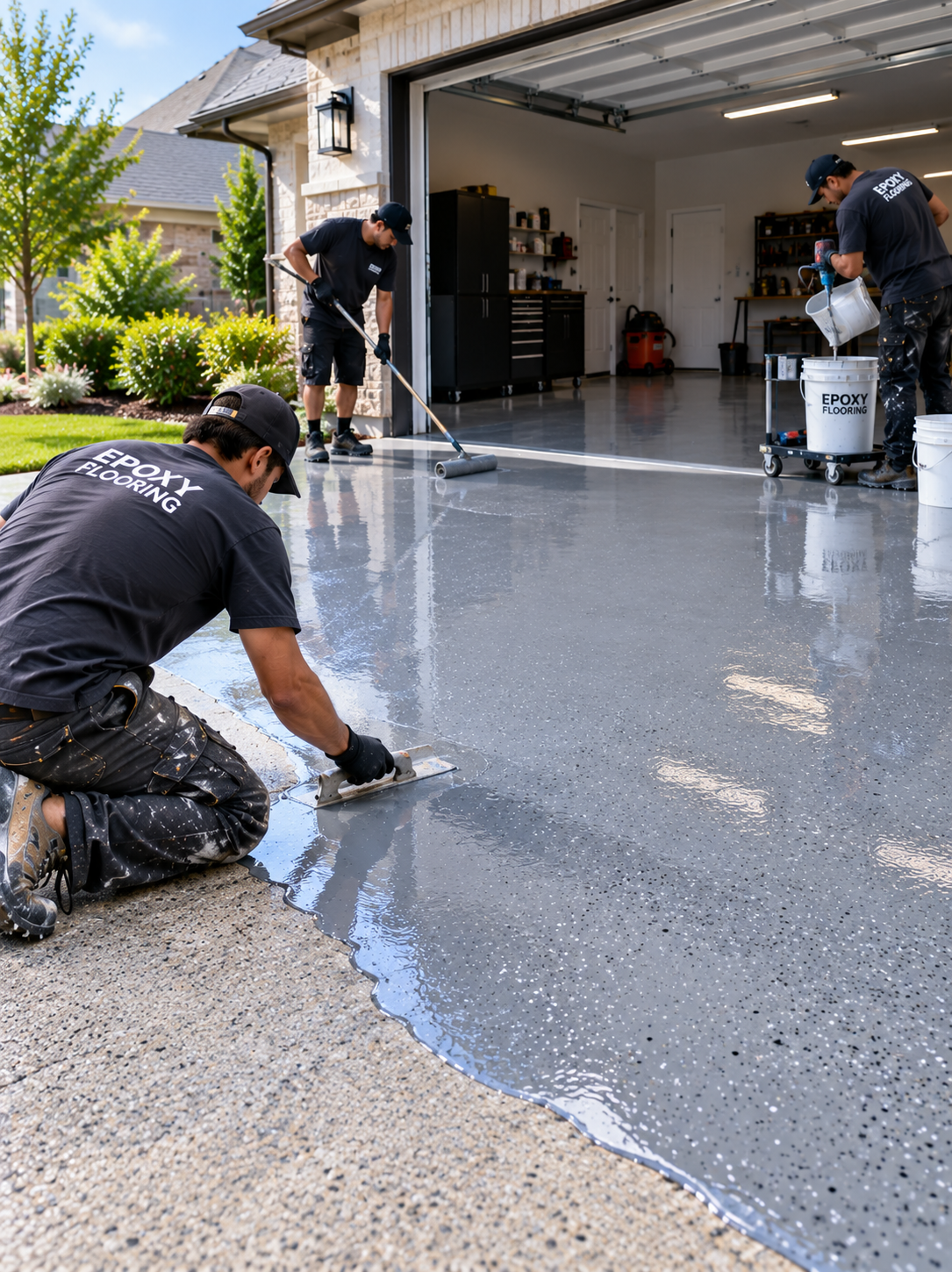
Concrete coating performance starts with the substrate. Surface preparation is intended to remove weak paste, dirt, curing compounds, incompatible sealers, old coating residue, and other bond breakers while producing a profile appropriate for the new material. Mechanical methods are commonly used because they provide controlled removal
and profiling rather than relying only on chemical cleaning.
Moisture deserves separate attention. Concrete can transmit moisture even when the surface looks dry. Industry guidance for floor coverings and coatings recognizes moisture testing, interpretation, and mitigation as important parts of successful installation. If a slab shows unexplained darkening, efflorescence, prior delamination, or other warning signs, covering it without investigation can create avoidable risk.
Cracks and joints also need realistic expectations. A repair material can fill a static crack and improve the appearance of the floor, but a coating cannot stop structural movement. Isolation joints, expansion joints, and active
cracks may need to remain functional or receive a flexible detail.
Why Professional Installation Matters
DIY kits can make metallic epoxy flooring appear simple, but coating failure often begins below the visible surface. Inadequate profiling, oil left in the slab, trapped moisture, incorrect mixing, missed recoat windows, thin coverage, and unsuitable product selection can lead to peeling, bubbles, soft spots, uneven color, or premature wear.
Professional installation is valuable because the work can be matched to the substrate and service environment. Mechanical preparation equipment, dust control, repair materials, mixing procedures, wet-film management, broadcast technique, and timing all affect the result. Fast-curing products are particularly unforgiving because the installer has less time to mix, place, and finish material.
Price should be compared in context. Ask what preparation is included, how many layers are proposed, what chemistry is used in each layer, whether decorative media is full or partial broadcast, what topcoat is specified, how cracks and joints are handled, and what conditions could require additional work. Two estimates that use the same general phrase such as 'epoxy floor' may describe very different systems.
Choosing a Garage Floor Coatings Contractor in Sugar Land, TX
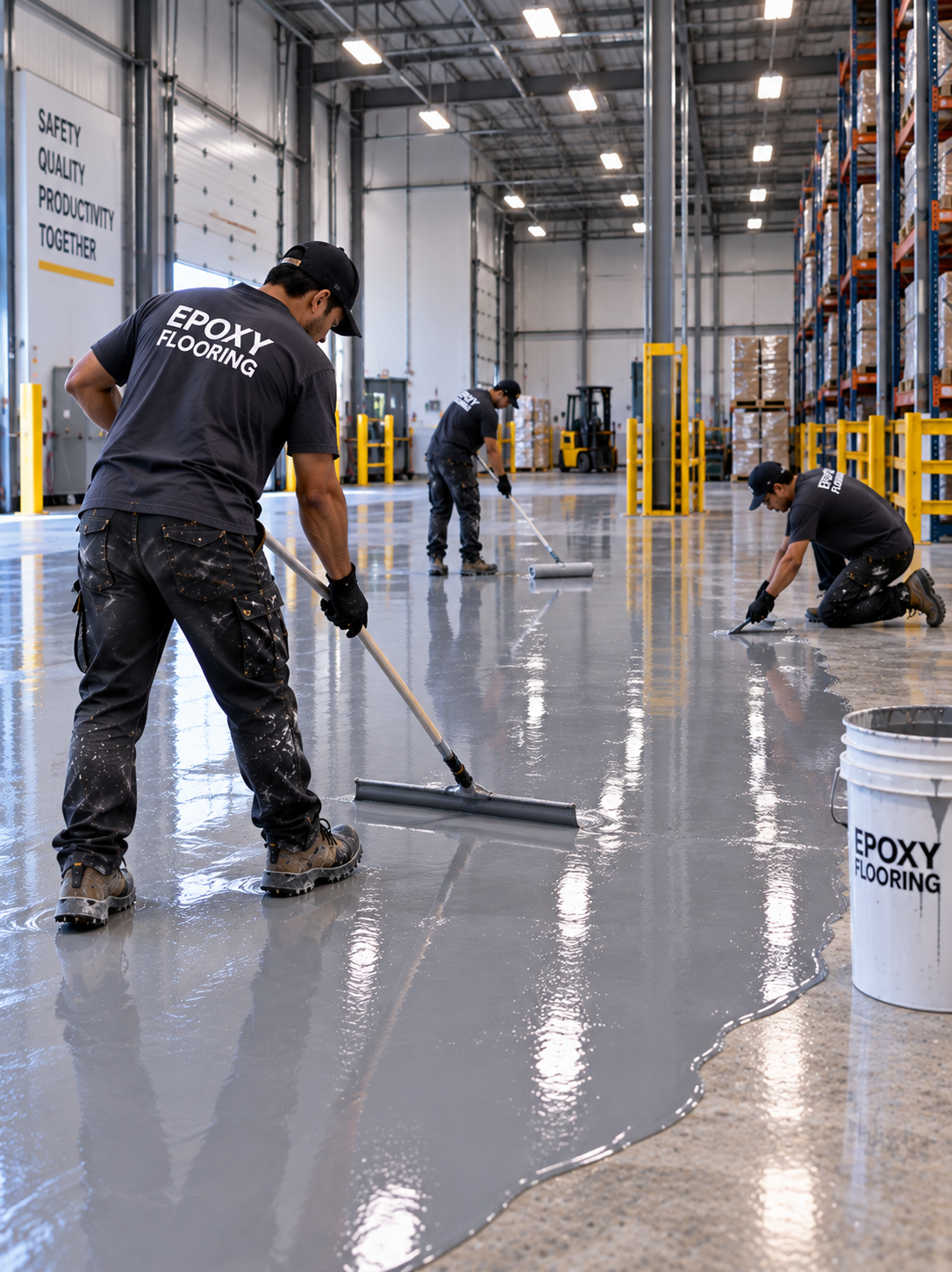
When comparing a garage floor coatings contractor in Sugar Land, ask for a clear description of the proposed system rather than relying only on brand names or broad labels. The scope should identify preparation, repairs, coating layers, decorative broadcast if any, topcoat, texture, and anticipated cure or return-to-service time.
Useful questions include: How will the concrete be prepared? What happens if moisture or contamination is found? Which layer provides UV resistance? How is traction adjusted? Are moving joints being honored? What cleaning products should be avoided? What is the realistic schedule for foot traffic and heavier use?
Customers should be cautious about promises that one chemistry is always 'best.' Epoxy, polyaspartic, polyurea, urethane, and other resin technologies have different strengths. A credible recommendation should connect product
characteristics to the actual project conditions.
Why Consider Sugar Land Epoxy Flooring Pros
Sugar Land Epoxy Flooring Pros focuses the conversation on practical fit: what the concrete needs, how the space will be used, and what finished appearance the customer wants. That approach helps property owners compare options without assuming that every slab or every coating system is identical.
For customers researching Garage Floor Coatings Sugar Land TX, a useful estimate should make the scope understandable. You should know what type of preparation is contemplated, what decorative and texture choices are available, and what questions need to be resolved before installation. Clear expectations are especially important for curing time, existing cracks, moisture, color variation, and maintenance.
Because no unsupported project history, certification, warranty, or performance claim should substitute for the details of the proposed work, customers are encouraged to discuss their actual space and request recommendations based on its condition.
Frequently Asked Questions About Garage Floor Coatings
When can I park on a newly coated garage floor?
Vehicle return time depends on the exact coating chemistry, temperature, and manufacturer instructions. Foot traffic may be allowed earlier than vehicle traffic. Follow the project-specific cure schedule rather than a generic one-day rule.
How long does garage floor coatings last?
Service life depends on the coating system, concrete preparation, traffic, exposure, cleaning, and maintenance. A lightly used residential floor and a high-traffic commercial floor should not be expected to wear at the same rate. Proper preparation and a system matched to the environment are major factors in longevity.
How long does installation take?
Project duration varies with square footage, repairs, number of coats, decorative steps, cure speed, and site conditions. Fast-curing systems may allow shorter schedules, while multi-layer epoxy systems or extensive repairs can take longer. Return-to-service time should be confirmed for the exact products used.
Does the concrete need to be ground first?
Many professional resinous floor systems require mechanical preparation such as diamond grinding or shot blasting to remove weak surface material and create the profile needed for adhesion. The correct method depends on the slab and the coating specification.
Can cracks be repaired before coating?
Many nonmoving cracks and small defects can be repaired or treated as part of preparation, but repairs do not
guarantee that a crack will never reappear. Structural movement and active joints require different consideration
from ordinary shrinkage cracks.
What if the concrete has moisture?
Moisture should be evaluated rather than covered blindly. Excess moisture vapor can contribute to coating failures. Depending on the slab and test results, the project may require a moisture-tolerant primer, a mitigation system, a different flooring approach, or additional investigation.
Are coated floors slippery?
Any hard floor can become slippery when contaminated or wet. Texture can be adjusted with broadcast media or traction additives. More texture can improve grip but can also make cleaning more demanding, so the right balance depends on the space.
How do I clean the finished floor?
Routine dust removal and cleaning with a compatible neutral or manufacturer-recommended cleaner is usually appropriate. Abrasive tools and harsh chemicals should be avoided unless the specific coating manufacturer approves them. Spills should be removed promptly.
Request Information About Garage Floor Coatings in Sugar Land
If you are comparing garage floor coatings for a home, business, or facility in Sugar Land, contact Sugar Land Epoxy Flooring Pros to discuss the concrete, the way the space is used, the look you want, and the schedule you need. A useful recommendation should connect those details to preparation, coating chemistry, texture, decorative options, and realistic curing requirements.
Ask for an estimate or consultation for Garage Floor Coatings Sugar Land TX. The next step is to evaluate the project conditions and determine which system makes sense for the surface rather than forcing every floor into the same solution.